


Radio Fm Without Internet
4.0211.00 Reviews
App Specs
- Version
- 6.2
- Updated On
- License
- Free
- Downloads
- 1,000,000+
- Developer
- San Valmout
- Categories
- Music & Audio
- Platform
- Android
Screenshots
 Analysis by AppCompare
Radio Fm Without Internet is the kind of music and audio app I reach for when I want a simple way to listen to radio stations online without turning the experience into a complicated setup project. Developed by San Valmout, it focuses on the basic job suggested by its name: opening a station, listening, and moving on with my day. It is free, rated for Everyone, and available for devices running Android 7.0 or later.
After spending time with it, my impression is straightforward: this is more useful for casual radio listening than for people who want a complete music-management system. The interface and purpose are easy to understand, while the trade-off is that the experience depends on the quality and behavior of online radio streams. If you want albums, offline downloads, deep recommendations, or a carefully organized personal library, a dedicated music service will probably suit you better. If you mainly want quick access to live radio, this app has a sensible place on your phone.
How I use it for everyday listening
I make this app work best by giving station choice a small place in my routine instead of browsing whenever I have a spare moment. A short list of dependable options—one for quiet tasks and another for livelier background sound—can save time without requiring any special feature. That habit also makes it easier to tell whether a hiccup is unusual, which leads naturally to the setup checks I use before settling in.
A simple starting routine
My normal workflow begins with a practical question: what do I want to hear right now? For background music while cooking, I choose a station and let it run. For a short break, I avoid browsing endlessly and pick the first suitable option. That small habit matters because radio apps can become less convenient when I treat them like enormous music catalogs. The appeal here is the immediacy of live listening, not the promise of controlling every song.
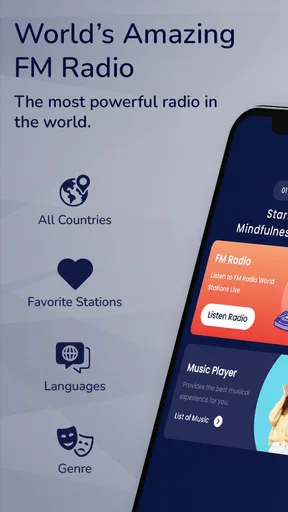
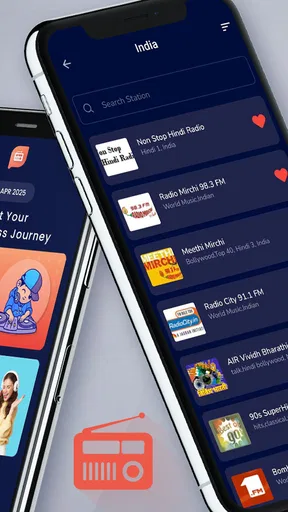
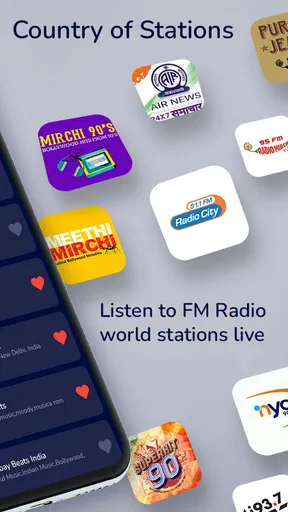
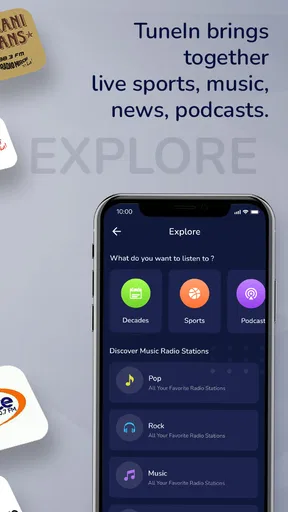
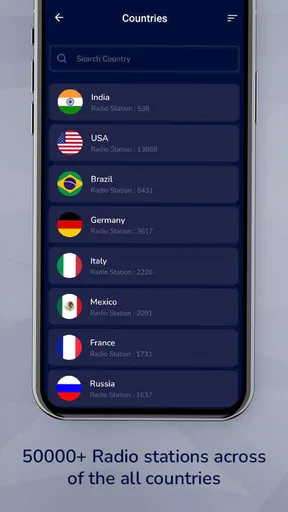
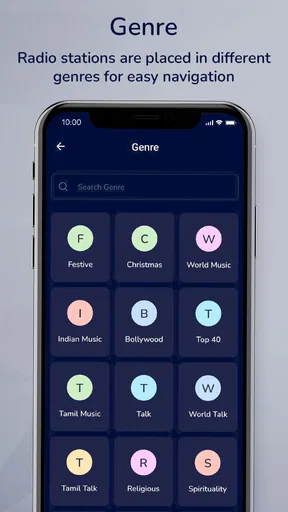
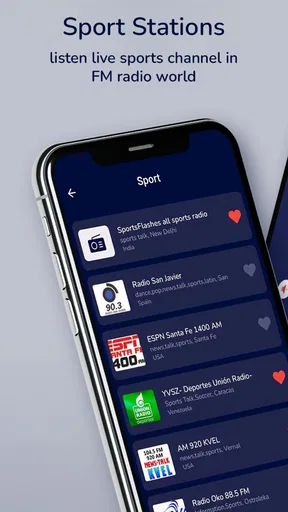
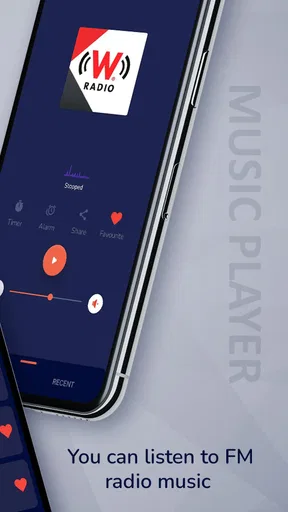
The store summary describes online listening to favorite radio stations, and that matches the role I found for it. I would use it during a commute, while tidying a room, or at a desk when I want sound in the background. It is also handy when I am tired of selecting individual tracks. A station gives me a continuous program, which removes the small decisions that come with building a playlist.
One realistic scenario is a morning routine in which I start a station before making breakfast, lower the phone volume, and leave the device somewhere nearby. I do not need to keep looking at the screen, and the app becomes a lightweight audio companion rather than another task demanding attention. That is where its straightforward design makes sense.
Because it is an online radio app, I treat the connection as part of the experience. A weak mobile signal or congested Wi-Fi can interrupt playback, and changing locations may affect continuity. I would not depend on it as my only entertainment during a flight, in a basement with poor coverage, or anywhere I already know the connection is unreliable. The name may suggest listening without a connection, but the confirmed store description presents it as online radio, so I plan around internet access rather than assuming offline playback.
Worth Reading Before You Choose

EA SPORTS FC Mobile 26 Is a Bigger Football Game, but It Takes Time

Flipboard Shows What News Apps Must Do Beyond the Feed

Switching to Android Auto Means Rethinking Your Driving Routine

Google Calendar Makes a Crowded Week Easier to Manage

Ludo King Makes the Most of the Minutes Between Plans

Baby Panda World Brings Quick Play to Modern Phones, but Its Game Library Feels Busy
What the first few minutes tell me
The first thing I look for in any radio app is how quickly I can get from opening it to actual sound. With this one, the sensible approach is to avoid overthinking the first session. Explore the available stations, test a few that match your taste, and notice which ones begin playing reliably. A station that sounds good but starts slowly or drops frequently may be less useful than a less familiar station that works consistently.
I also listen for the difference between a station that suits focused work and one that suits active listening. Talk-heavy programming can be useful during chores but distracting while reading. A music-oriented stream may work better at a desk, while news or discussion can make a walk feel more engaging. The important point is to judge stations by the situation, not only by their names.
My advice is to give each promising station a short, fair test instead of switching every few seconds. Radio programming changes, and an opening moment does not always represent the whole experience. At the same time, I would not waste time forcing a stream that repeatedly fails. A quick, repeatable selection habit makes this app feel much more convenient.
Keeping the phone usable while audio plays
Radio listening works best when I stop treating the screen as the main part of the app. Once playback begins, I put the phone down and use the audio as background sound. This is especially comfortable for household tasks, because I am not constantly searching for another track. It also helps preserve attention: I can listen without turning a simple activity into a browsing session.
There is a practical trade-off here. Online radio is less predictable than a downloaded playlist. A presenter may interrupt a music sequence, a station may change its programming, or the stream may stop when the network becomes unstable. I see that unpredictability as part of live radio, but people who need complete control should choose an offline music player or a subscription service with downloads instead.
Who will appreciate the basic approach
I think the app is a good fit for listeners who want free access to radio-style audio and do not need a large collection of personal controls. It can also suit someone moving from traditional radio to phone-based listening, since the mental model remains familiar: choose a station and listen. The Everyone content rating makes it broadly approachable for general household use.
It is less suitable for a listener who expects every station in a particular region, guaranteed background playback in every situation, or a sophisticated system for sorting favorites, podcasts, albums, and downloaded files. I would also steer serious audiophiles toward a service with clearer information about stream quality and stronger playback controls. This app is at its best when convenience matters more than fine adjustment.
Settings I check before settling in
I do not assume that the default setup is ideal. My first useful check is the phone’s own audio behavior: media volume, notification volume, Bluetooth output, and whether another app is already using the speaker. Many apparent radio problems are actually device-level issues. Testing the sound before starting a long listening session prevents the familiar frustration of discovering that playback was routed to headphones left in another room.
I also check the app’s available controls calmly rather than hunting for options that may not be there. The confirmed product information identifies it as a free radio app, but it does not promise an extensive settings system. That means I use the controls that are visibly available and avoid building my routine around imagined functions. The best setting is the one that improves a repeatable listening habit, not the one that merely looks advanced.
On a phone with limited battery, I pay attention to how long I plan to listen and whether the screen needs to remain active. I prefer to start playback, lock the device if the app allows normal background listening, and keep the phone cool and accessible. I do not claim that every device will behave identically, because Android versions and manufacturer power management can affect audio apps differently.
For Bluetooth listening, I connect the speaker or headphones before choosing a station. This avoids beginning playback through the phone speaker and then interrupting the stream while changing output. In a car, I would make the connection before driving and select the station while parked. That is a small safety habit, but it also makes the app feel more dependable.
Useful checks when playback is unreliable
When a stream refuses to start, I troubleshoot in a fixed order. First I check whether other internet apps load normally. Then I try another station. If one station fails while another plays, the problem may be specific to that stream rather than the entire app. If nothing plays, I restart the app and check the connection before blaming the phone.
This simple comparison is one of the most useful habits I developed with radio apps. It prevents me from deleting or reinstalling an otherwise functional application because of a single unavailable stream. It also tells me when the sensible answer is to stop trying: if the network is poor, no amount of tapping inside the app will create a stable connection.
I would not recommend repeatedly switching between Wi-Fi and mobile data while walking or driving just to keep one station alive. That creates more friction than it solves. Instead, I choose a station that behaves well in the current location and accept that online radio is affected by the environment.
My faster station-selection pattern
Experienced use is less about discovering a secret feature and more about reducing unnecessary decisions. I divide stations into a few practical groups in my head: something calm for work, something energetic for exercise or cleaning, and something conversational for a walk. I do not need a complicated catalog if I already know the kind of sound I want.
When I find a station I enjoy, I make a note of its name outside the app if the app does not provide a convenient favorite workflow. That may sound basic, but it gives me a dependable fallback after an update, a device change, or an accidental reset. I would rather keep a short personal list of reliable stations than spend several minutes browsing every time I open the app.
Another useful pattern is to start listening before the moment I actually need audio. If I am about to clean the kitchen, I start the stream while gathering supplies. If I am leaving home, I choose the station before putting on my shoes. This removes the temptation to browse while moving and makes the app part of a routine rather than a last-second decision.
For short listening sessions, I choose a station quickly and accept the first suitable result. For longer sessions, I give myself permission to change once if the tone is wrong. This two-step rule keeps me from endlessly searching while still allowing the app to match my mood. It is a small workflow, but it makes a general radio tool feel more personal.
Using it with other audio habits
I would not try to make this app replace every audio service on my phone. Instead, I use it for live, low-effort listening and keep a podcast app for spoken episodes and a music service for specific artists or albums. That division is clearer than expecting one app to handle every format equally well.
Compared with ordinary broadcast radio, phone-based online listening can be more convenient when I want to carry the same style of audio around, but it is more dependent on data connectivity. Compared with a streaming music subscription, it offers a more passive experience but less control over exactly what plays. Compared with a podcast player, it is better for continuous live programming and worse for pausing a long episode and returning precisely where I left off.
Those differences are not flaws by themselves. They simply define the job. I would choose this app when I want a station-led experience, not when I want a personal queue with exact track selection.
Where the limits become noticeable
The biggest limitation is the uncertainty that comes with online streams. A station can be unavailable, slow to begin, or unsuitable at a particular moment. The app cannot fully control the quality of the source stream, the network route, or the behavior of every phone. I therefore judge it by how easily I can move to a working station, not by expecting perfect control over every broadcast.
Another limitation is that a free radio app should not be confused with a full audio ecosystem. My ideal music service remembers extensive listening history, builds personalized mixes, supports downloads, and gives me detailed control over playback. I would not install this app expecting all of those capabilities. Its value is the directness of radio listening, and adding too many expectations makes the comparison unfair.
There is also a personal taste issue. Someone who dislikes presenter interruptions, scheduled programming, or unexpected song choices may quickly become frustrated. I enjoy those elements when I want discovery and background sound, but I choose a controlled playlist when I need concentration or a specific mood. Knowing that distinction saves more time than searching for a perfect setting.
What the audience size suggests
The app has passed one million installs, carries an average rating of 4.0 from around five and a half thousand ratings, and has about two hundred reviews. I read those figures as signs of a reasonably established audience rather than proof that it will suit every listener. Ratings can reflect different expectations: one person may value quick access to stations, while another may judge the app mainly by stream stability or interface depth.
For me, the more useful question is whether the app matches my listening pattern. A moderate rating does not make it a poor choice for casual radio, just as a large install count does not guarantee that every station will work equally well on my connection. I would test it with the stations I actually want before making it a permanent part of my routine.
Version and device considerations
The current version is 6.2, and the app runs on Android 7.0 or later. That gives it a broad compatibility range for Android users, although the exact feel can still vary between older and newer phones. On an older device, I would keep expectations practical and close unused audio apps before listening for a long time. On a newer phone, I would still check battery and background behavior rather than assuming all audio apps act the same.
I also prefer updating only when I have time to test my normal routine afterward. If I rely on a station during a commute, I would not wait until the morning of an important trip to discover that the interface or playback behavior feels different. This is not a criticism of version 6.2 specifically; it is simply a sensible habit for any app that I use as a daily audio tool.
My verdict after building a routine
After using Radio Fm Without Internet as a straightforward radio companion, I see its strongest quality in its narrow focus. I can open a free Music & Audio app from San Valmout, find a station, and let live programming fill the background without managing a personal library. That simplicity is valuable when I want sound rather than another system to organize.
I would recommend it to someone who enjoys radio, wants a no-cost option, and has a dependable internet connection. I would especially suggest trying it if you prefer choosing a station over choosing every individual song. The most satisfying results come from creating a small routine: test reliable stations, remember the ones that fit different moments, connect headphones or speakers first, and troubleshoot by comparing streams instead of assuming the whole app has failed.
I would skip it if offline playback is essential, if I need precise song selection, or if my listening depends on advanced library tools. In those cases, a downloaded music player, podcast app, or full streaming service is a better match. For casual online radio, though, this app earns its place by keeping the path from opening the phone to hearing audio pleasantly short.
My final view is positive but measured. Radio Fm Without Internet is not a replacement for every kind of audio app, and its online nature creates unavoidable dependence on connection quality and station availability. Within its intended lane, however, it is approachable, free, and easy to fit into everyday habits. If your ideal listening session begins with “pick a station and let it play,” I think it is worth trying.
Pros
- Works without mobile data after stations are saved or available offline.
- Simple interface makes finding favorite stations quick and easy.
- Uses little battery compared with streaming radio applications.
- Useful during travel or in areas with weak or unavailable internet.
- Provides convenient access to local FM broadcasts on compatible phones.
Cons
- Requires a phone with built-in FM hardware and compatible headphone support.
- Station availability depends heavily on your location and local broadcasts.
- Audio quality may vary because it relies on the device’s FM receiver.
- Many newer smartphones do not support offline FM radio functionality.
- Headphones may be needed as an antenna
- limiting wireless listening options.
FAQs for Radio Fm Without Internet
What is Radio FM Without Internet, and how does it work?
Radio FM Without Internet is an app designed to let users listen to local FM radio stations without relying on mobile data or Wi-Fi. However, the app generally requires a device with a built-in FM radio chip, and wired headphones may be needed because the headphone cable often works as the antenna. Availability and performance depend on your phone model and region.
Can I use Radio FM Without Internet on any Android or iPhone?
No. The application may not work on every smartphone. Many modern phones, especially iPhones and some Android models, do not include an accessible FM receiver. Before downloading, check whether your device supports offline FM radio and whether the app is compatible with its operating system. If the phone lacks the necessary hardware, the app may only offer limited features or fail to tune stations.
Does Radio FM Without Internet really work without mobile data or Wi-Fi?
When your phone has compatible FM hardware, the app can tune into broadcast stations without an internet connection, making it useful in areas with poor coverage or when you want to save data. Nevertheless, features such as online station directories, streaming channels, program information, or station updates may require internet access. Offline listening is normally limited to locally receivable FM broadcasts.
Do I need headphones to listen to stations with this app?
In many cases, yes. Wired headphones are commonly required because their cable acts as an antenna for the phone’s FM receiver. Bluetooth headphones may not work for tuning stations, even if they can play the audio after a station has been found. Reception can also improve when you are outdoors or near a window, while buildings and interference may reduce signal quality.
What are the main limitations and privacy considerations before installing it?
The app’s usefulness depends heavily on your phone’s FM hardware, local station coverage, and the quality of the antenna connection. You should also review the permissions requested during installation, particularly access to audio, device information, or network services. Avoid unofficial downloads, read recent user reviews, and check whether the application contains advertisements, in-app purchases, or online features despite its offline-radio name.


